Summer brings more than heat. It brings wet footprints, extra humidity, and busy household activity. All of that can create the perfect storm for flooring problems, especially in rooms with laminated flooring. These surfaces are built tough, but they don't do well when exposed to water over time. With the dry season also comes more chances for indoor leaks, sweaty pipes, or air conditioners dripping in quiet corners.
While laminated flooring stands up to wear and tear, water is still a problem if it seeps in. Layers can swell, seams might lift, and long-term moisture can lead to warping or soft spots. During warmer months, the way we move through our homes changes. That shift matters. Paying attention to a few habits starting in mid-summer helps keep flooring in solid shape before bigger issues show up later.
Watch for Moisture Sources Indoors During Summer
Some causes of floor damage stick out. A broken pipe or flooded bathroom is hard to miss. But a lot of summer-related water issues are subtle until the damage is done. They collect slowly, one drop at a time.
- Air conditioning units may drip condensation that travels under furniture or rugs
- Pipes that sweat in warm air can dampen cabinets or wall edges
- Damp towels tossed on the floor start small mildew patches around seams
- Tracks from sprinklers, puddles, or pool water show up fast near entry points
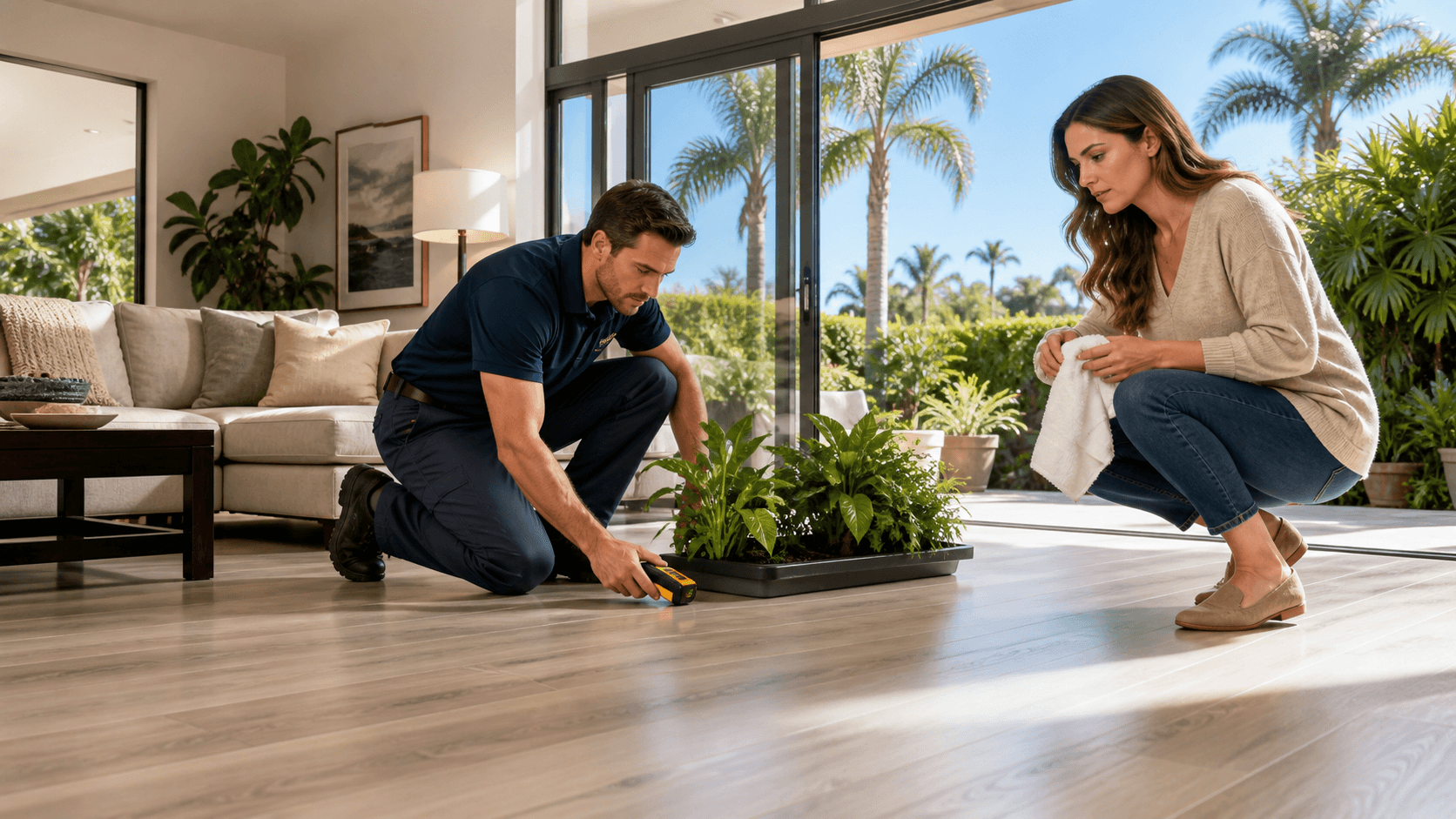
We check under sinks once a month during hot spells. It takes only a minute, and if the baseboard feels soft or has discolored spots, it could be a sign water is sneaking in. Entryways, laundry rooms, and areas behind appliances are easy to overlook too. Swelling near corners or lifted planks at thresholds are early red flags that shouldn't be ignored.
Keep Humidity Under Control to Protect Your Floors
Not all water damage comes from puddles. Humid summer air can settle on flooring and create new problems over time. If the air stays too damp, laminated flooring might bulge or feel spongy underfoot. That usually points to moisture gathering between the floor and what sits underneath.
We focus on airflow and dryness during long heat waves, even if it feels like overkill. Things to try:
- Run the AC to circulate cool, dry air
- Add dehumidifiers in rooms that feel muggy, especially if windows stay closed often
- Close windows when it's sticky outside, since opening them lets moisture in
- Use vent fans during showers or cooking to stop steam from drifting into nearby rooms
Bath mats, kitchen corners, and hallways with low airflow need some extra attention. We avoid positioning fans directly across wet floors because it can just move warm, damp air around. It's better to control the root cause than blow it into another corner.
California Flooring Service, Inc installs premium laminate and waterproof luxury vinyl flooring with moisture barriers, helping Orange County homeowners defend against summer humidity and leaks. Our team uses industry-tested products to minimize swelling, warping, and edge lifting, even in high humidity rooms or near water-prone entryways.
Make Smart Choices About Floor Cleaning in Summer
During summer, it's tempting to mop more often. Dust builds up fast with open doors and extra traffic. But heavy mopping can make things worse, especially when it's hot out. Too much water, even warm water, sinks past seams and speeds up separation in laminated flooring.
We keep cleaning simple during these months:
- Use a dry mop or vacuum for daily upkeep
- Spot clean spills right away with a damp, not soaked, cloth
- Stick with mild laminate-safe floor cleaners that leave no residue
- Dry any cleaned area with a towel or fan after wiping
It helps to avoid wetting large areas all at once. If seams start to look raised or boards shift under pressure, it's a signal to pause and inspect. Frequent mopping in summer hides problems until the damage becomes more visible.
Reduce Outdoor Water from Coming Inside
Homes take on more outside activity in summer, kids running in, dogs trailing garden water, and hoses left running near doorways. All of that can end up right on the floor if no one's watching.
We've cut back a lot of untracked water with a few small adjustments:
- Keep doormats near every entry point and vacuum them each week
- Ask guests and family to leave shoes at the door, especially if they've been near grass or pools
- Wipe dog paws using a towel or place a washable mat near sliding doors
- Move any sprinkler heads away from doors or windows
- Make it a habit to set wet items, like towels or swim gear, on hooks or shelves, not directly on the floor
A little control at the source helps the rest of the space stay dry. Even a brief moment of dampness near a seam can lead to long-term damage if it sneaks under the surface layer.
Why Summer Prep Pays Off Later
Laminated flooring has a reputation for being strong, but moisture is its weak spot. Catching the small stuff, like humidity, spills, and wet shoes, can make a big difference in how long it looks and feels good. Summer is a good time to build better habits, especially when heat and moisture are both around.
We find preventative steps are much easier, and cheaper, than big repairs later. Floors stay flatter, color holds better, and seams stay tight when water stays out. A few simple checks help us protect what's under our feet as temperatures keep climbing. Then when fall and winter settle in, we're not cleaning up problems caused by the season before.
Laminated flooring holds up well when it's dry, but even a little water can cause long-term damage if you don't stay ahead of it. We've seen how summer habits like dripping towels, indoor humidity, or wet shoes can quietly wear down a floor's surface. That's why proper care and early checks are so important during these warmer months. Spotting shifting seams or warping may mean it's time to reconsider which floors work best for your space. Discover how we handle laminated flooring options that stand up to summer moisture, and connect with California Flooring Service, Inc to discuss upgrades designed for your home.