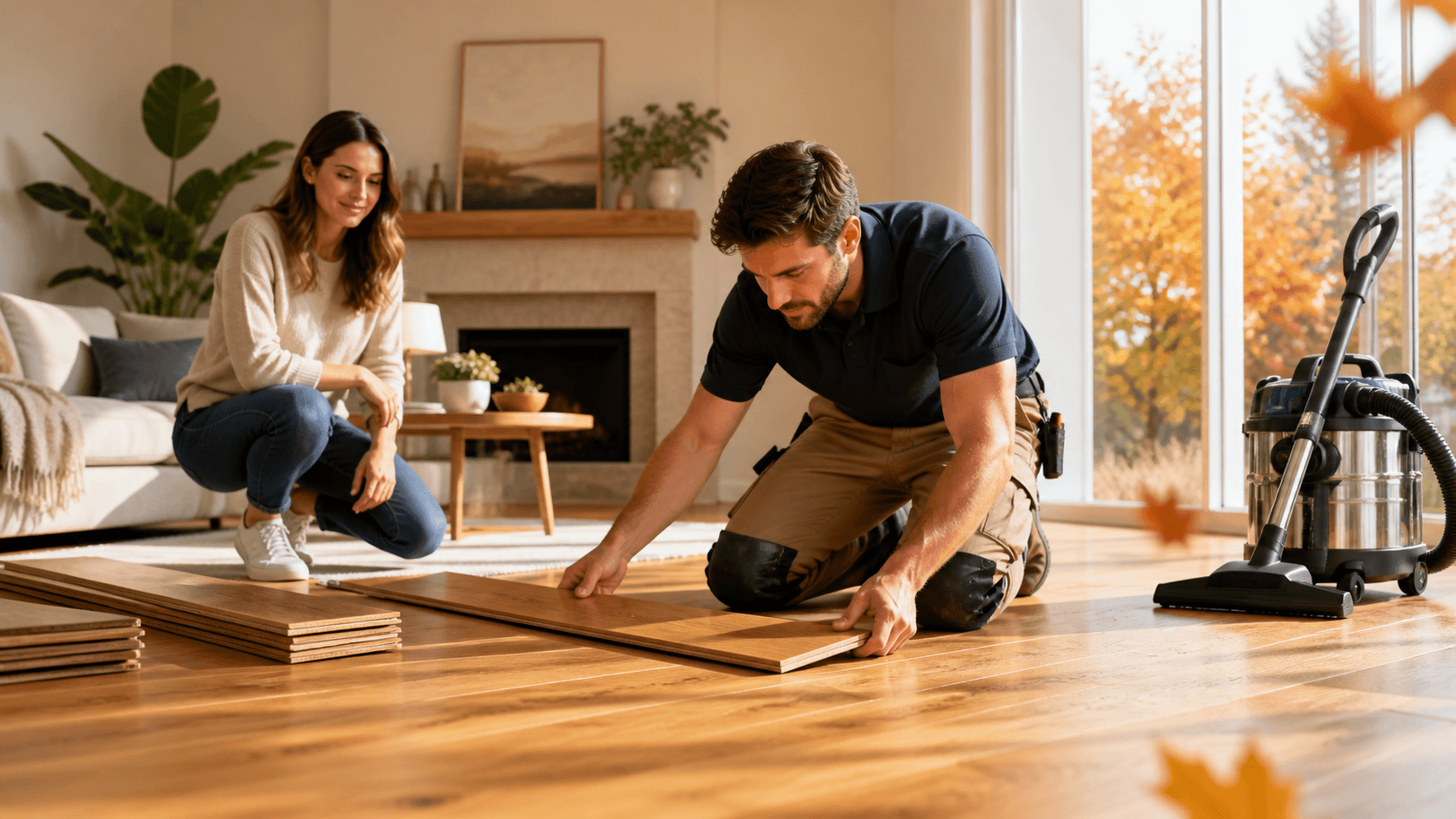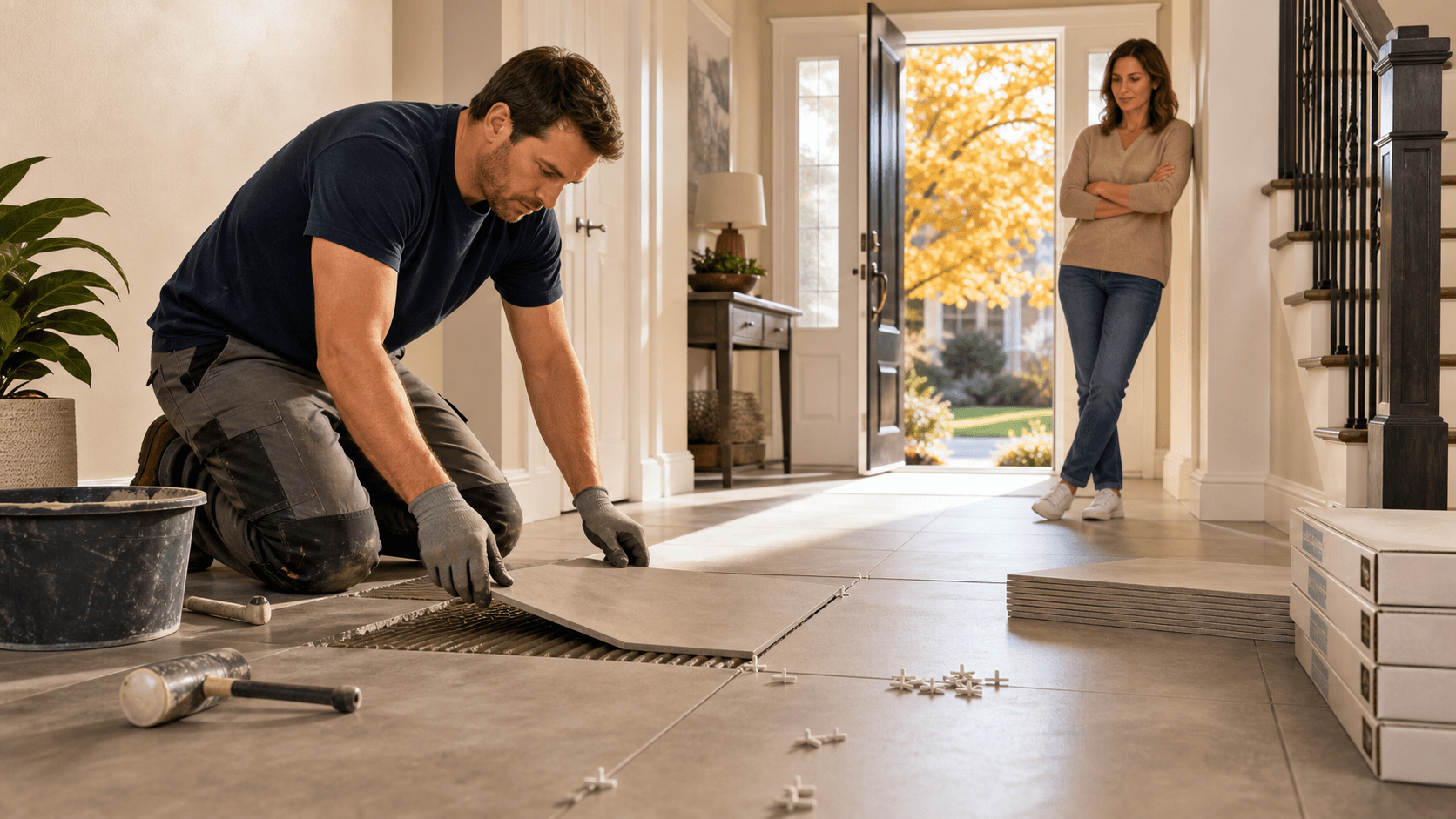
Fall tends to bring more activity into hallways. School runs, weekend guests, and rainy day errands all add up to more steps across the same space. This makes it a good time to take a closer look at what's underfoot. A smart choice like tile installation offers long-term durability, especially in places where people come and go all day. We see it hold up well to wet boots, dropped bags, and muddy shoes without showing damage. If your hallway is already busy and only getting busier this season, updating the flooring can be a practical way to stay ahead of wear.
We're breaking down what makes tile a smart choice for fall, from how it handles weather to the prep work that goes into making it last. Whether your hallway is wide and open or narrow with constant foot traffic, there's probably a tile style that fits the way your home works.
Best Flooring Materials for Fall Foot Traffic
When the air cools and leaves start to drop, it brings more moisture and dirt indoors. That's especially true near front doors, mudrooms, or hallways that connect to outside spaces. Even in California, where fall weather stays relatively mild, we still track in water and grit from shoes. That puts extra pressure on floors that already handle daily movement.
Wood and carpet, while popular, don't always respond well to this kind of wear. Carpet can absorb water and hold stains. Wood may expand from moisture or get scratched by grit. Tile, on the other hand, holds steady. It's dense and tough. Most types won't warp or stain, even when leaves or bits of gravel sneak in.
This makes tile an easy winner for fall entry points. It requires less maintenance under pressure and keeps its clean look longer without extra work.
Choosing the Right Tile for Hallways
Not all tile is the same, so we think carefully about what works best in a hallway. Porcelain is usually the go-to for high-traffic areas because it's dense and long-lasting. Ceramic also works well with the right finish. Both types come in options that mimic natural stone or wood for added warmth.
When it comes to texture, smoother tiles often look sleek but can be slippery when wet. For areas near entry doors, a matte or textured finish adds grip so the floor feels safer. Color choices matter too. Lighter tiles can brighten dark halls, while mid-tones hide dust better than pure white ones.
To stretch the space visually, we often suggest:
- Long rectangular tiles running along the length of the hallway.
- Large-format tiles to reduce grout lines and make the floor feel seamless.
- Lighter patterns or veins that draw the eye rather than stop it.
California Flooring Service, Inc specializes in high-traffic hallway and entry tile installations using advanced underlayment, stain-resistant grouts, and tile styles from wood-look planks to textured stone, ensuring resilient and attractive flooring for Orange County families.
Prep Before the Install: What to Know
Preparation is the part most people don't see, but it plays a big role in making a floor last. Before the job begins, we clear out the space completely and check the subfloor for any damage or uneven spots. Smoothing those out makes sure the tile lies flat and won't crack later.
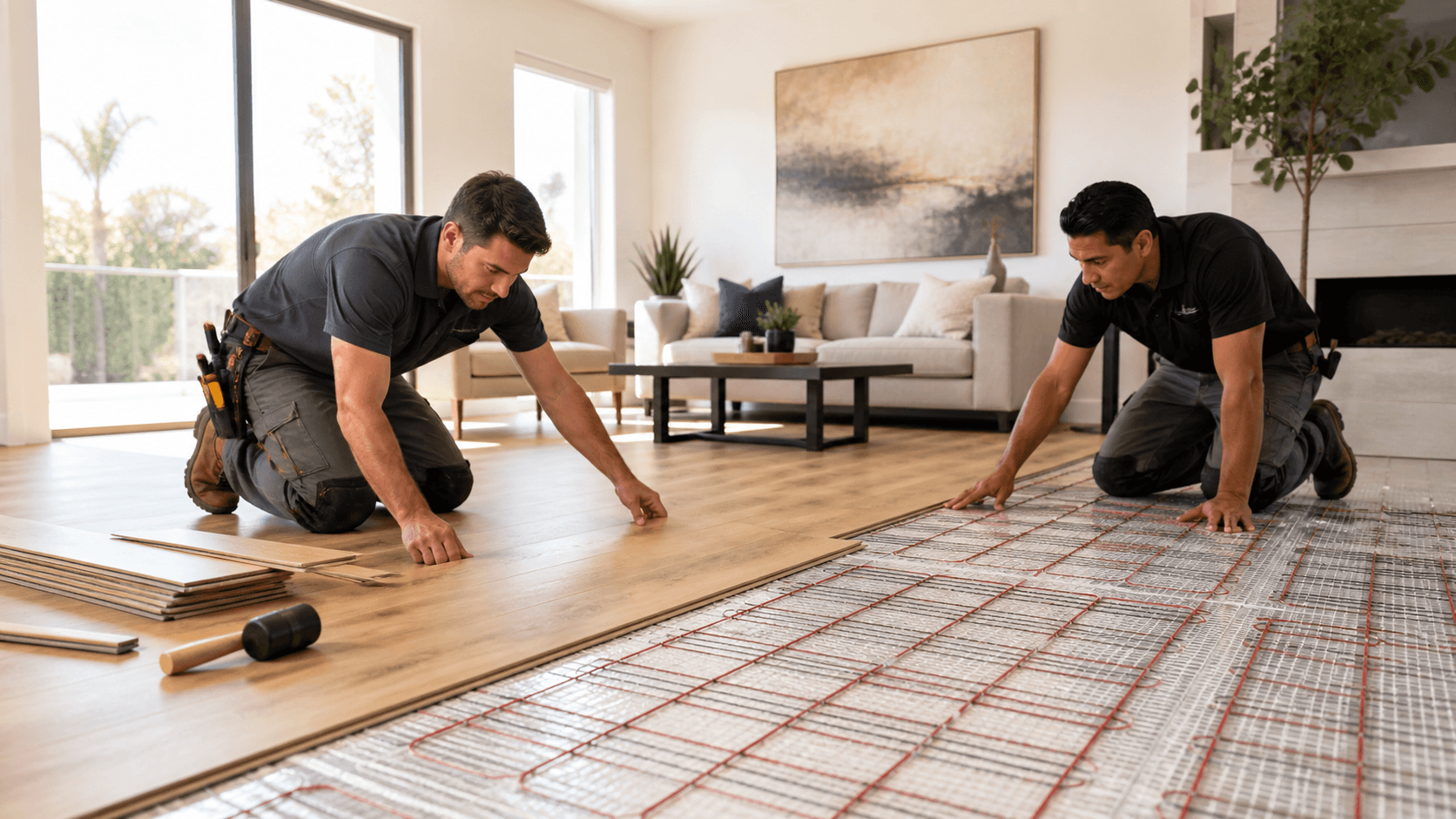
We also choose the underlayment carefully. This layer acts like a cushion between the rough subfloor and the finished tile. It keeps tile secure and helps with temperature and sound. Grout selection matters too. We use types that resist stains and hold up better over time.
From start to finish, a hallway tile installation usually doesn't take long, especially if the space is straightforward. Still, giving it the right setup means it will hold up longer without issues.
Maintenance Tips to Keep Hallways Looking Great
Once the tile is in, upkeep is usually simple. That's another reason we recommend it in areas that see a lot of movement. A quick routine keeps things looking clean without much effort.
Here's what we often suggest:
- Sweep or vacuum regularly to remove dirt and grit.
- Mop with a pH-neutral cleaner when needed (no bleach or harsh chemicals).
- Place doormats inside and outside entry doors to trap most debris.
- Use felt pads on furniture or baskets that rest on the floor.
If your home includes pets or kids, you'll notice tile handles the activity better than most surfaces. It won't snag under paws or show wear from sports bags dragging across the entryway.
Why Fall Is the Ideal Season for This Project
Fall is a smart season for upgrades like hallway flooring. In October, the weather is pretty steady with no extreme heat or rain. That makes the materials easier to work with and helps adhesive settle properly without added pressure from humidity or temperature swings.
It also tends to be a quieter stretch in between summer travel and holiday hosting. That gives more flexibility for scheduling without interrupting major plans. If you're hoping to have the space settled before guests arrive later in the year, starting the project in the fall is a good fit.
We've noticed that hallways finished in October tend to stay cleaner through the rest of the year. You enter winter with a fresh, easy-to-clean surface that stands up to whatever the holidays bring.
Built to Last: Creating Hallways That Handle Life
A hallway sets the tone for the rest of the home. It's one of the first spaces people see and one of the most used. That's why strong, easy-to-maintain tile floors matter more than most people expect at first.
Fall brings a natural window for making changes that support comfort and durability. A tile floor fitted now helps cut down on mess, reduce cleaning stress, and handle the higher foot traffic headed your way. It's a small change that makes a big difference in how your space feels every day.
When your hallway experiences heavy traffic, it's a great opportunity to upgrade with a smarter, longer-lasting surface. We've installed floors in all types of Orange County homes, and again and again, the right tile stands up best in high-movement areas. A well-designed layout and quality materials make daily spaces easier to maintain and enjoy. Take a look at your busiest rooms today, and let us help with a dependable solution like professional tile installation. Contact California Flooring Service, Inc to get started on your project.