Introduction
Summer is a popular time for tackling home updates, especially indoor and outdoor tile work. But once the heat sets in, a lot of people start second-guessing whether it's the right time. Warm weather brings longer days and easier scheduling, but it also brings confusion. There's plenty of talk out there, and it can be hard to know what's outdated advice or just plain wrong. That's why we make it part of our job to clear up what people often get wrong about tile installation. For homeowners in hot regions, especially places like Southern California, summer doesn't have to work against you. In fact, when handled thoughtfully, it can be one of the best times to get flooring work done.
Common Myth: Tile Can't Be Installed During Hot Weather
One of the most common things we hear is that summer heat makes tile installation too risky. The idea comes from a real place, adhesive sets faster when it's hot, and grout can dry too fast if the timing is off. But avoiding the season altogether isn't necessary. What matters more is how well the plan matches the conditions.
- We adjust work schedules so that most installation happens during the cooler parts of the day, often early morning or late afternoon.
- Materials are stored in a way that prevents them from overheating. That includes both tile and the setting compounds we use.
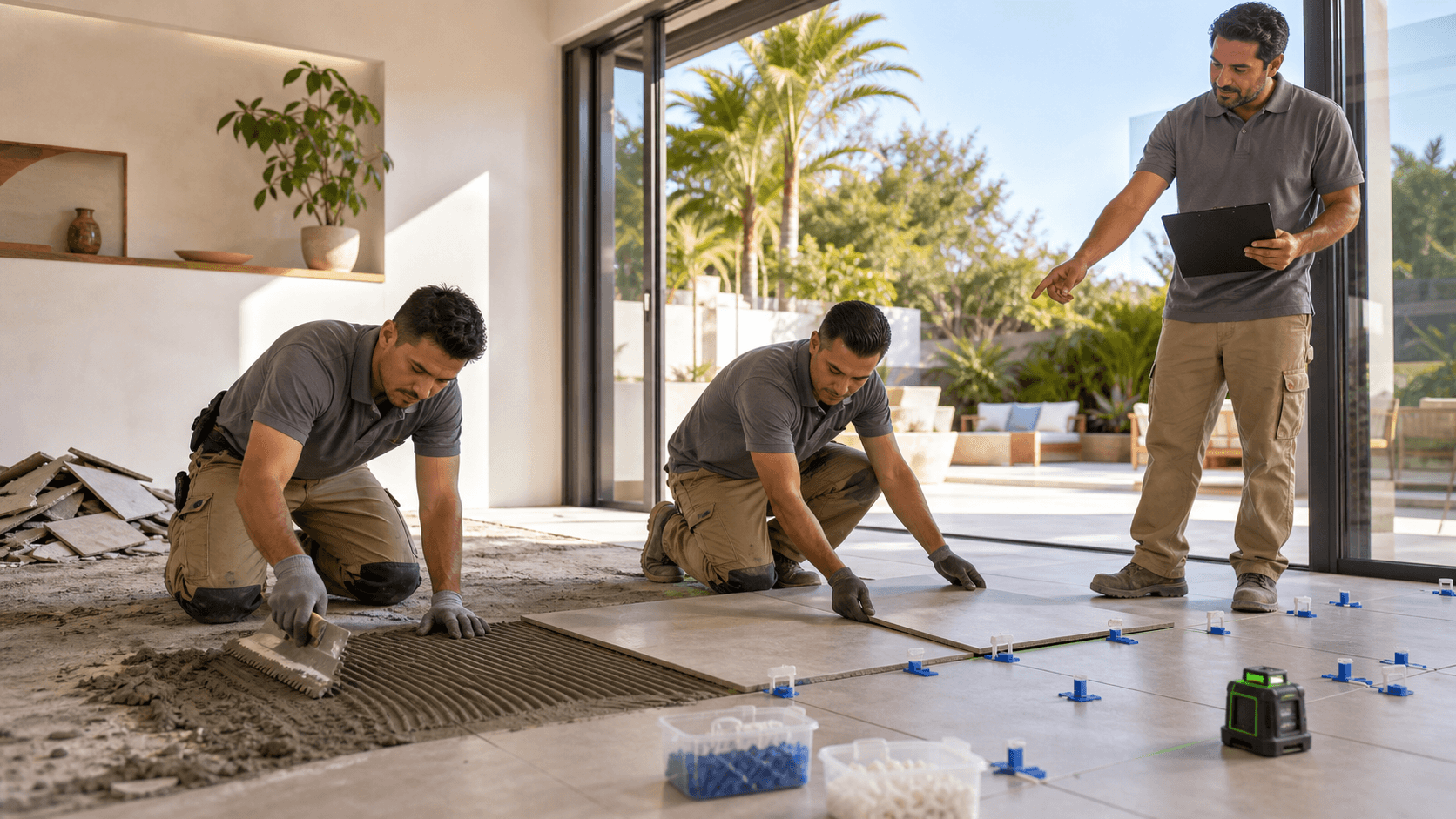
- We work quickly but carefully when it comes time to set the tile, making sure every piece is positioned and settled before the adhesive reacts to the heat.
Summer can be a fine time for tile work when you have the right knowledge and flexibility. The key is knowing how to prevent shortcuts and avoid pushing work into the hottest hours of the day.
California Flooring Service, Inc uses temperature-safe adhesives, precision-setting systems, and advanced surface prep techniques for both indoor and outdoor tile installation projects throughout Orange County. Our team is experienced in adapting tile installations to local weather, ensuring quality results even during the hottest summer weeks.
Myth: You Can Skip Acclimation Because Tile Isn't Wood
Some people assume that because tile isn't soft or flexible like wood, you don't have to think about acclimation. While tile won't expand and shrink like hardwood, it still reacts to heat, moisture, and airflow, especially in spaces that don't get much cooling.
- Tile in closed garages, sunrooms, or patios that bake through the afternoon can hold heat or become brittle.
- Grout lines are especially vulnerable. If the tile gets too warm before or right after install, movement can cause cracking or separation over time.
- We always give tile time to adjust to the room's temperature before laying it, especially in summer. That gives everything a better chance to settle the right way.
Skipping these steps just because tile looks solid can lead to issues weeks later when temperatures shift again. We treat summer installs with just as much care as any other season.
Myth: Any Surface is Fine for Tile as Long as It's Dry
It's tempting to think that as long as a surface isn't wet, tile can go right over it. But dryness isn't the only thing that matters. Especially in summer, changing humidity levels and uneven subfloors create trouble that's not obvious right away.
- Soft surfaces, like old vinyl or cushioned underlayers, move too much beneath tile and can lead to cracks.
- Uneven areas cause tile to rock or lift later, even when it looks fine at first.
- We always take time to level and clean the subfloor fully before starting. That includes checking for trapped moisture, even inside concrete, which can expand during extreme heat.
Prepping a surface fully is where most of the long-term protection comes from. It's not just about that one hot week. It's about steady wear once everything is in place.
Myth: All Tile Is Water-Resistant and Great for Outdoors
A lot of people shop for tile assuming water resistance means it can be used anywhere, including pool decks, patios, and exterior walkways. But not all tile stands up to outdoor summer exposure, especially in dry, sunny regions.
- Indoor tile might survive a spill in the kitchen but can fade, warp, or crack after a full season under direct sun.
- Heat causes some glazes to bubble or wear out. Others become dangerously slippery when wet.
- We always sort indoor and outdoor-rated tile ahead of time, checking for things like roughness, thickness, and color stability.
For homes in places like Orange County, where summer sun is no joke, we look for stone, textured porcelain, and other materials that hold up without trapping heat. Matching the product to the setting makes all the difference in how long it lasts and how safe it feels year after year.
California Flooring Service, Inc features a wide selection of outdoor-rated porcelain and stone tiles ideal for patio and poolside use, providing clients with moisture protection, slip-resistance, and UV stability year-round.
A Solid Plan Keeps Your Tile Looking Sharp All Season
Summer myths around tile work can get in the way of progress. People end up waiting months for cooler temps or rushing into choices that don't hold up. But once you understand what actually matters, it frees you up to plan smarter.
Heat might change the pace or timing, but it doesn't block good work. A thoughtful prep process, the right materials, and a sense of season-specific care all keep your project moving and your tile looking clean, smooth, and solid well into the future.
We believe smart planning is what really keeps summer installs working for you, not against you. When time, surface, and setting are all part of the conversation, the heat becomes just another factor, not a roadblock.
At California Flooring Service, Inc, we know that timing and technique matter just as much as materials when it comes to summer builds. Whether it's indoor remodeling or refreshing outdoor living areas, making thoughtful choices early helps prevent problems later. When new surfaces are on your mind this season, our team can guide you through product options, prep needs, and scheduling. To get started, see how we approach tile installation during warmer months, and reach out to discuss your space and timeline.