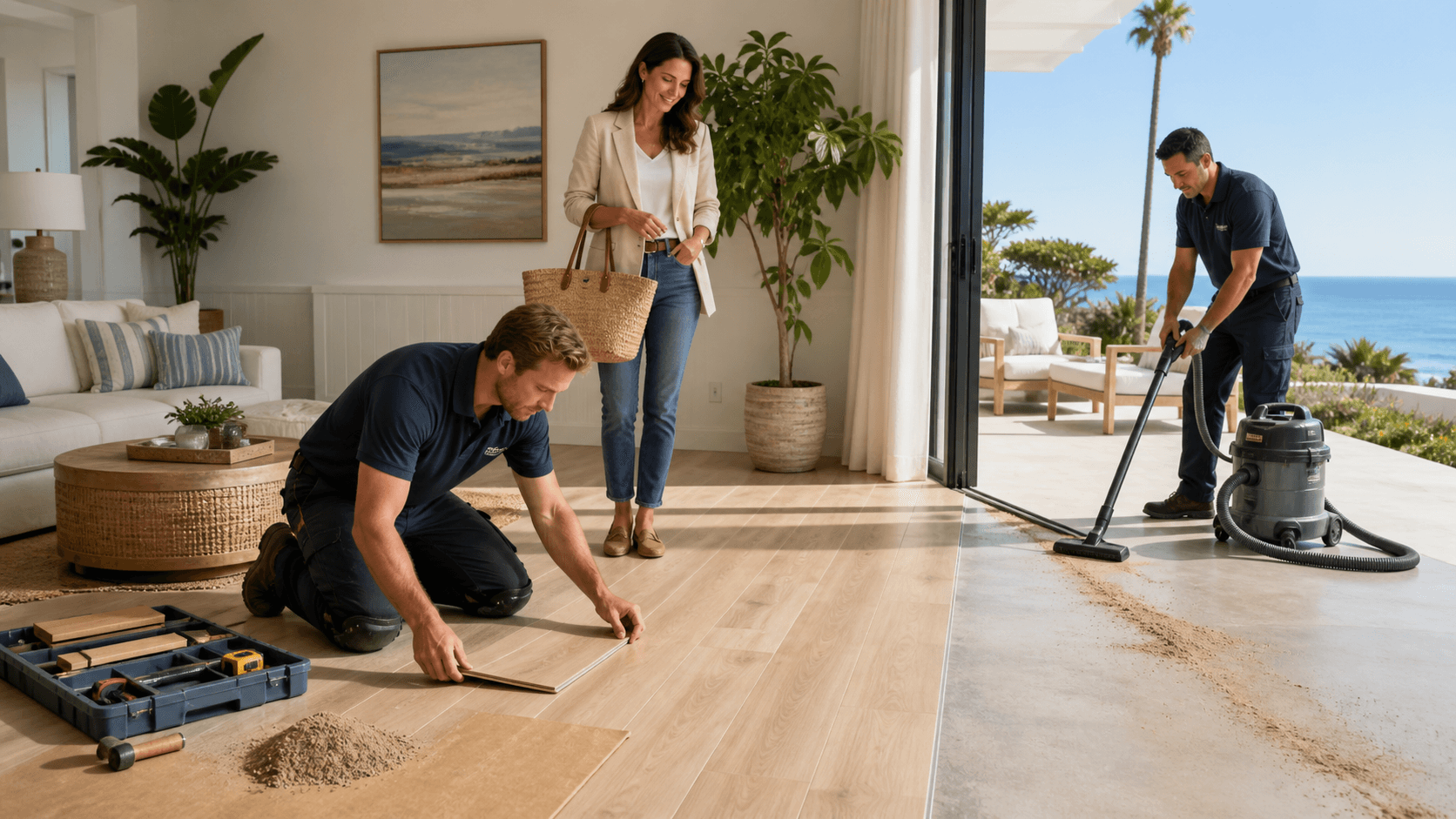
Living close to the ocean comes with sun, surf, and open windows, but it also comes with sandy floors. If you're near the coast, you already know how easy it is for that fine grit to sneak indoors and wear down your flooring. Summer only makes it worse. People go in and out more. Kids run around barefoot. Breeze flows through screen doors. Every grain of sand that comes with it builds up over time, especially if you have hard flooring.
That's why so many coastal homeowners go with luxury vinyl flooring. It holds up better to all that summer traffic, is water-resistant, and is easier to clean when life outside makes its way inside. But even with durable floors, sand control still takes a little strategy.
Why Sand Is Tough on Floors
At first glance, sand might seem harmless. It looks soft. It brushes off shoes. But underfoot, those tiny grains do some real harm if they're left to build up.
- Sand acts like a fine grit of sandpaper. It scratches as it gets ground into the surface by shoes or furniture.
- No matter how smooth your floor looks, protective finishes can slowly wear down from that constant friction.
- Sand rarely spreads evenly. It hangs in corners, clings to baseboards, and piles up near doorways. Over time, those spots wear faster and stain more easily.
If you don't get ahead of it, all that light surface wear adds up fast. Laminated layers can go dull, seams catch more grit, and the floor loses that clean feel.
How Luxury Vinyl Flooring Holds Up
We see a lot of homes near the water where luxury vinyl flooring holds its shape and appearance better than other materials. It's especially useful through warmer months when extra sand, moisture, and sunlight are a constant.
- It has a strong wear layer on top that resists dents and dings, even with sand tracked in or dropped bags near doorways.
- It's softer and quieter underfoot compared to ceramic tile, which can feel colder and less forgiving.
- Cleanup is easier. Most types handle sweeping, vacuuming, or light damp mopping with no problem, so you're not scrubbing or sealing constantly.
Luxury vinyl gives a practical balance between looks and durability for people living near beaches or on sandy properties. It still needs care, but it forgives more day-to-day wear than traditional hardwood or tile.
California Flooring Service, Inc provides a wide selection of waterproof and scratch-resistant luxury vinyl flooring designed for coastal California homes. Our installations are engineered to withstand frequent moisture, foot traffic, and sand, giving you a comfortable, easy-to-clean surface year-round.
Daily Habits That Keep Sand Under Control
It doesn't take a full remodel to cut back on daily sand damage. Just tweaking everyday habits can go a long way. Setting up smart zones turns your entrance into a sand barrier instead of a highway into the living room.
- Leave a place for shoes right at the door. Whether it's a tray, mat, or cubby, once shoes come off, grit stays put.
- Use a soft broom or a stick vacuum for light daily sweeps, especially near entries or patio doors. These tools are fast and don't wear on the floor.
- Make it a habit to do a five-minute clean at the end of the day. Even a quick pass keeps sand from scratching overnight when it's stepped on without socks or slippers.
The trick is repetition. Sand control works best when it becomes part of the routine instead of a once-a-week scramble.
Layout and Material Tips for Beach-Proof Entryways
The way your home is set up makes a big difference in how far sand can travel. If you live near the ocean, making small layout changes right where sand first hits your floor can reduce wear in the main living areas.
- Place tough rugs both outside and inside your front and back doors. Look for coarse textures that catch sand, not just fabric that sits on top of it.
- Add a bench or small shelf where people can sit and remove shoes or drop beach bags. It keeps sand in a tight zone instead of across the house.
- Use long runners in hallways or common walkways where sand ends up. These lighter floor coverings can be cleaned easily and protect the vinyl underneath.
Not every house needs a full mudroom to be sand-smart. Just focusing on the entry layout gives the rest of your floor more breathing room.
Seasonal Deep Cleaning and Care
Summer adds foot traffic, plain and simple. Even with a good daily routine, gritty buildup can still sneak into corners and seams. Setting aside time here and there for deep cleaning protects the floor and resets the space.
- Increase cleaning as your guest count rises. Big weekends or active weeks need a little extra care.
- Use manufacturer-approved liquid cleaners with a damp mop, not soaking wet, to lift settled sand from textured areas.
- Check spots you can't see easily. Floor trim, inside of closets near the coast-facing door, or seams near sliding glass doors often hide trapped debris.
Small seasonal cleanups help avoid long-term damage. They're especially important when the weather heats up and movement through the home increases.
Long-Term Protection Means Fewer Repairs
Sand rarely causes visible damage in a day, but over weeks and months, it adds up. Even the strongest flooring wears faster without some care. But it doesn't take a full reset to manage it.
- Set habits early. Some blending of outdoor and indoor life will always happen, but small daily steps make a big difference.
- Use entry rugs, shoe trays, and simple layout changes so rooms stay cleaner, longer between cleanings.
- Stay on top of both light cleaning and deeper care since both play different roles in fighting wear.
When we treat the floors like part of our living space, not just a surface underfoot, they last longer and stay looking their best. Summer around sand doesn't have to be hard on your home. With a little forethought, even houses steps from the shore can stay clean and comfortable all season long.
Summer traffic and sandy shoes can take a toll on your floors, especially in coastal homes. We've found that choosing the right material makes all the difference for durability and easy maintenance. That's why we often recommend luxury vinyl flooring to help you enjoy comfort without extra hassle. At California Flooring Service, Inc, we're here to help you upgrade your space. Give us a call and let's plan flooring that fits the way you live.