Introduction
By early August, heat becomes more than just a daily inconvenience. It starts affecting how we work, especially on projects like a wood flooring install. Warm air, high temps, and indoor moisture changes all play a role in how installations turn out this time of year. Heat can make planks expand before they're even placed. It can also mess with how glue dries or how dry the air feels after a few days of air conditioning. If we don't plan around the season, flooring can shift, adhesives might not hold evenly, and the job ends up taking longer.
Summer doesn't stop install projects, but it does change how we approach them. By knowing what to expect and adjusting how we prep, store, and work with materials, the job stays steady, and the finished floors hold up through future summers too.
Planning for Heat Before the Work Starts
The strongest start on any hot-season flooring project comes before a single plank is laid. Heat isn't just a discomfort. It affects how well the materials respond.
- We choose the coolest part of the day to begin work. Morning hours mean less direct sun and more stable temps, especially in rooms with south-facing windows.
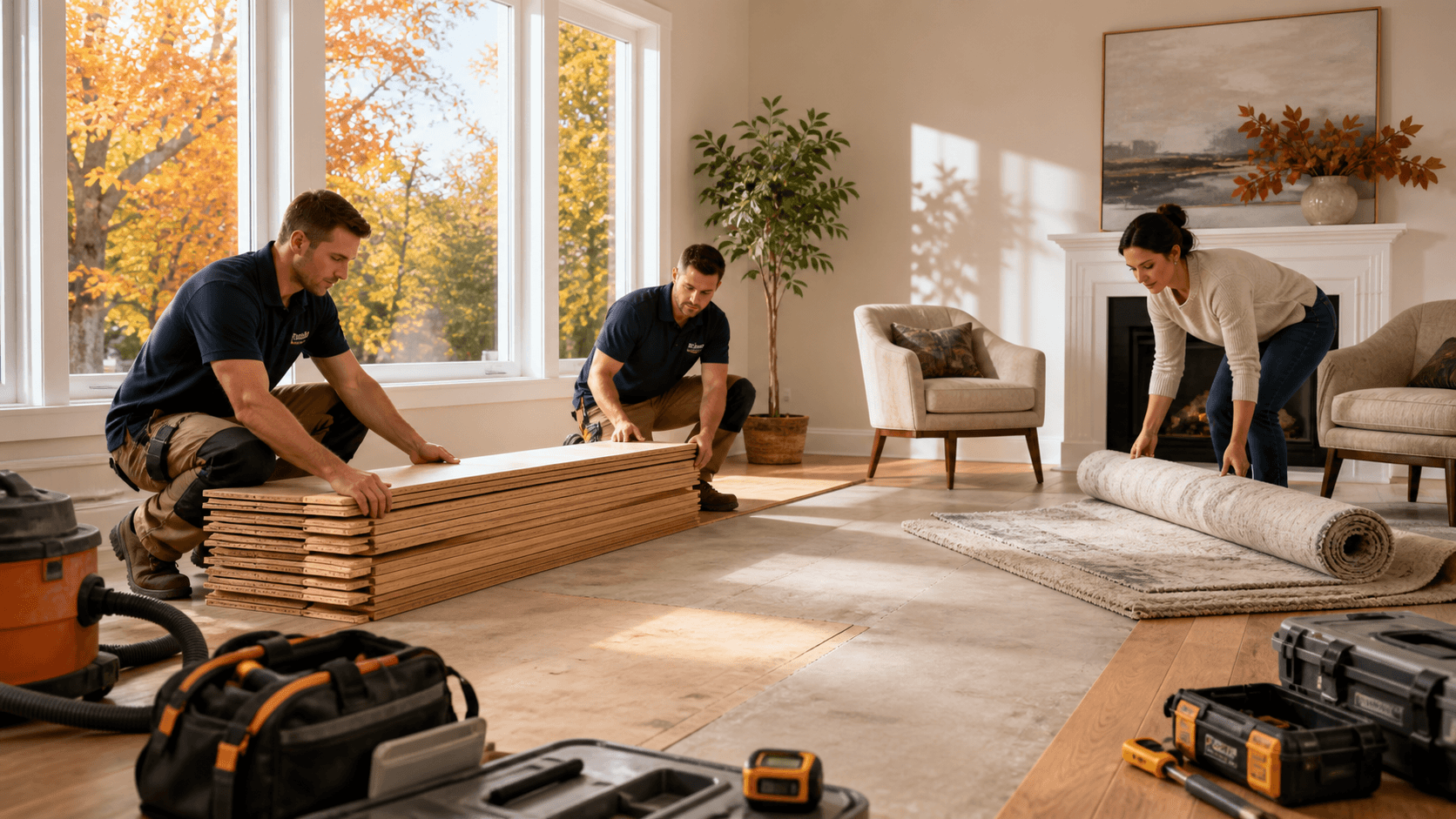
- We give flooring materials extra time to acclimate, especially solid wood. Leaving planks in the room for more than the standard two days helps them adjust to both the heat and humidity before install.
- We never leave wood flooring in a hot van or stacked near a window. Even an hour in direct heat can cause subtle changes in shape or moisture inside the board. We store everything inside, upright, and off the floor if possible.
All of this frontload setup creates a more consistent environment to lay flooring, which cuts back on shifting, gaps, and callbacks later on.
Indoor Conditions That Support a Safer Install
During mid-summer installs, indoor climate control becomes part of the process. A room that's just a few degrees too warm or a few points too dry can set the stage for problems later.
- We keep windows covered throughout the day to block direct sun and help the room hold a stable temperature.
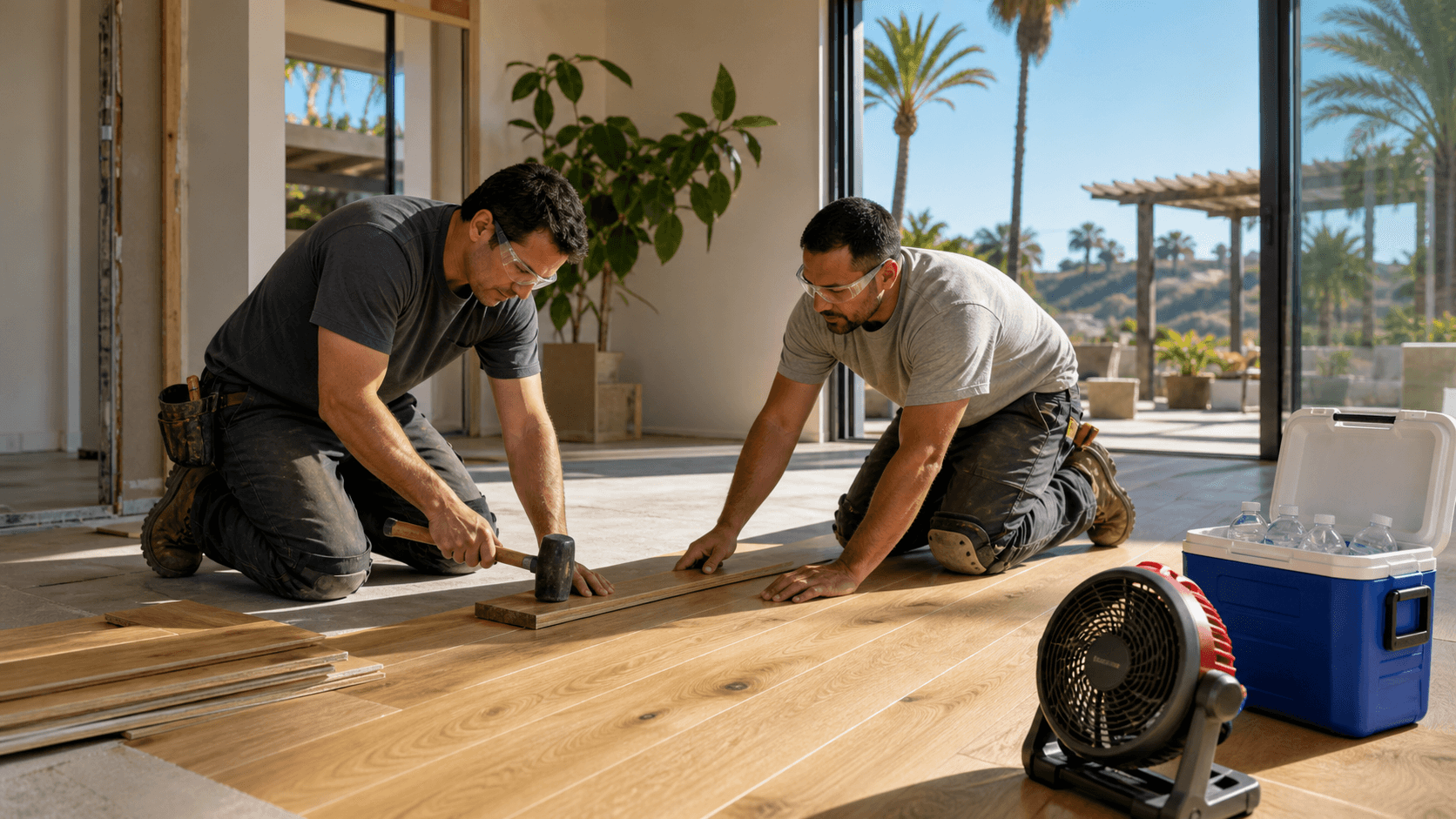
- Fans or air conditioning help lower heat buildup, especially in homes that go without consistent cooling. We adjust airflow so it doesn't blow directly onto freshly glued sections.
- We monitor humidity and use portable units if needed. When the air gets too dry, wood shrinks. When it's too humid, planks swell. Keeping the range steady helps floors settle properly without shifting later.
- Consistent daily temps help adhesives cure as expected and avoid sticky spots or areas that bond too fast.
These adjustments keep the space safe for both the people doing the work and the materials being installed.
California Flooring Service, Inc uses moisture meters and acclimation protocols to ensure wood flooring is properly tempered for varying weather conditions in Orange County homes. We help clients select and prepare solid or engineered wood floors for the local climate, maximizing installation success and long-term performance.
Working Safely Around Equipment and Tools
Power tools, adhesives, and fasteners all react differently under summer heat. We've learned the hard way that overheating gear not only delays the job but creates safety issues too.
- We limit power tool use during the hottest part of the day, especially saws and sanders that tend to heat up fast. If tools get too hot, they can slow down or stop altogether.
- Gloves with better grip help when our hands start to sweat and we're lifting planks or adjusting alignment. That extra friction helps avoid slips while using nailers or tapping blocks.
- Cords snake differently across rooms when fans and portable units join the mix. We tape down cables or move them as often as needed so no one trips mid-task.
Working steadily in warm spaces means staying alert and not pushing too hard. A few small resets go a long way in helping avoid accidents and tool damage.
Managing Worker Fatigue and Job Site Breaks
Summer work doesn't just slow material. It wears out people too. Installing wood flooring is physical, especially when it includes bending, carrying, and kneeling. Mix in high heat, and fatigue hits faster.
- We take more short breaks instead of longer ones spaced far apart. Staying hydrated and cool keeps us going longer and steadier.
- When possible, we rotate tasks. One person may move boards while another sets placement, then swap. Spreading out the physical strain helps everyone stay sharper throughout the day.
- We block off parts of the job to avoid overwhelm. Smaller zones mean smaller focus, and that helps us move through the room with purpose instead of rushing.
The goal isn't to rush through a hot job just to be done faster. It's to pace the day so the install stays consistent from the first board to the last.
Heat-Sensitive Materials and Timing Adjustments
Not all adhesives and finishes act the same in 90-degree heat. Some cure quicker, while others remain soft, or worse, set unevenly. A few timed steps keep these materials doing what they're meant to do.
- We check how glue behaves under high heat before using it across the whole room. Sometimes even waiting 5 more minutes before walking on it makes the difference between a smooth or damaged surface.
- We don't rush sealer or buffing steps. Warm air can trap soft finishes. Letting materials rest longer between stages helps floors harden properly without needing touch-ups later.
- Where timing matters, we lay flooring section by section and return hours later to test. Material tells us when it's ready, not the clock.
By listening to how heat shifts each step, we avoid patchy finishes or floors that feel tacky even after full install.
Keeping Summer Installs Safe and Steady
When we plan for heat, we work smarter. Wood flooring installs in summer need a few extra steps, not a full reset. Working around heat doesn't mean avoiding it. It means understanding what changes and slowing down where it counts.
From planks to glue to tools, everything behaves a little differently once the temperatures rise. Those differences don't need to stall a job. They just need a little respect. By prepping smarter, watching for warning signs, and making time for breaks, we keep our install crews and the flooring safe.
In the end, those small seasonal adjustments support better results. Summer floors settle flatter, glue holds stronger, and everyone ends the job with fewer surprises. When the heat's intense, simple changes make all the difference.
Heat can complicate your flooring plans, but at California Flooring Service, Inc, we're here to help you stay on track. Timing and preparation matter, especially during the warmer months when even slight temperature changes can impact your project schedule. With careful planning and the right conditions, your wood flooring install will last beautifully through any season. Let's work together to make your next indoor upgrade smooth and heat-smart from start to finish, call us today to get started.